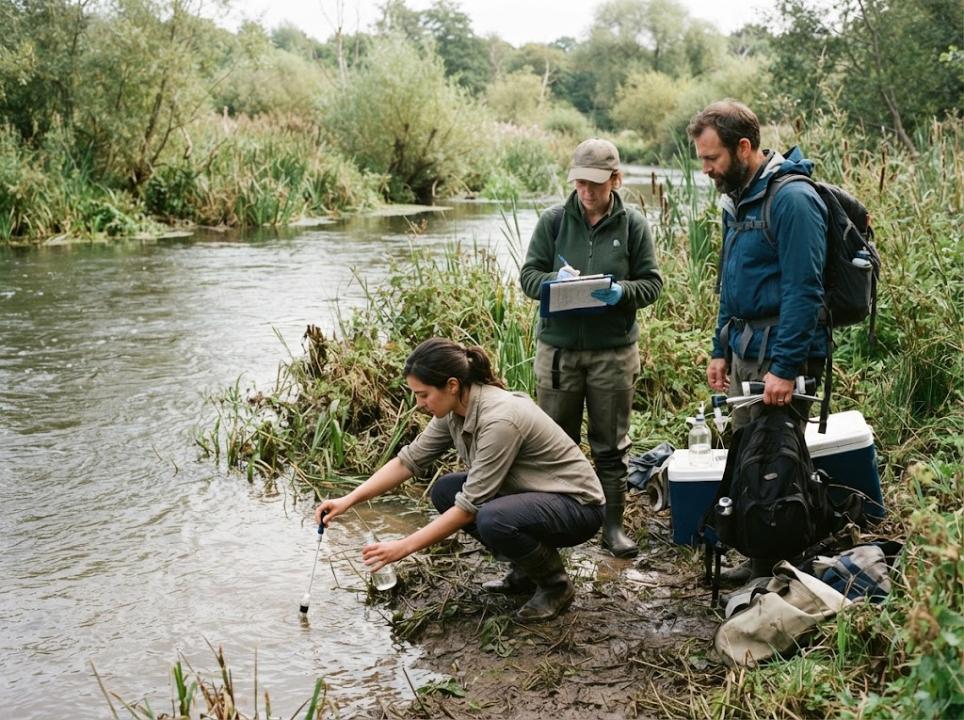
A river monitoring team in one country shares a contamination reading with a partner lab across the border, and the numbers get flagged twice: once for the pollutant level, and once because nobody is certain the units in the translated report match the ones the original lab actually used. Cross-border conservation work runs on data, and increasingly that data has to survive a language barrier before anyone can act on it.
Why conservation work has become a cross-border effort
Migratory species, shared river basins, and regional pollution don't respect national borders, which means conservation groups now coordinate constantly with partner organizations in neighboring countries. A wetland restoration project might involve field teams speaking three or four different languages, all feeding data into the same shared reports. Keeping that information consistent has become as much a logistics challenge as a scientific one.
Where a translation gap actually costs conservation groups
The risk rarely shows up in a single dramatic mistranslation. It shows up in small inconsistencies that accumulate across dozens of field reports, until a multi-year dataset no longer lines up cleanly. A species count recorded slightly differently across two languages, or a measurement unit lost in translation, can quietly undermine years of careful fieldwork before anyone notices the discrepancy.
Keeping field protocols synchronized across teams
Organizations running projects across several countries increasingly rely on a translation management system to keep survey protocols, safety procedures, and data collection templates consistent across every language their field teams use. A platform like translation platform online lets a project coordinator update a monitoring protocol once and have every translated version updated automatically, which matters when a methodology changes mid-season and every field team needs to follow the same revised steps.
Partnering with Russian-speaking research institutions
Several major conservation initiatives, particularly those tracking migratory birds and freshwater ecosystems across Eurasia, depend on data-sharing agreements with Russian-speaking research institutions. Teams that rely on an informal or rushed russian to english translation of field survey data risk introducing errors into shared datasets that later get cited in international conservation assessments, where a single misread figure can shape funding decisions.
Ukrainian conservation projects under difficult conditions
Conservation work in and around Ukraine has continued despite the ongoing conflict, often documenting environmental damage that will matter for restoration planning years from now. Partner organizations abroad who receive this field data need a careful ukrainian to english translation to ensure that damage assessments, species counts, and habitat surveys are usable in international reports without losing critical detail.
Conservation groups producing field reports in four languages have plenty of substance and almost no audience, because the reports sit in PDFs nobody can find. Funders and journalists search the same way everyone else does. Several organisations have started treating seo services as part of their communications budget, which has moved their research from archive to citation.
Volunteers add another layer of complexity
Many cross-border conservation projects lean heavily on volunteer citizen scientists, who submit observations through apps and paper forms in their own language. Aggregating this volunteer data into a single usable dataset means translating not just formal scientific terminology but also the more casual, sometimes ambiguous language volunteers use to describe what they saw. Projects that skip this step often end up discarding a meaningful share of otherwise valuable observations.
Grant reporting raises the stakes further
International funding bodies typically require detailed progress reports before releasing the next installment of a grant, and those reports often need to satisfy reviewers who read only English or only the funder's home language. A conservation group that submits a poorly translated report risks delayed funding at exactly the point in a project when field costs are highest, from equipment replacement to extended monitoring seasons.
Building translation into the research budget from the start
The organizations that manage multilingual data most successfully treat translation as a line item in their original project budget rather than an afterthought handled by whoever happens to speak a second language. Setting aside funds for professional translation from the proposal stage avoids the scramble that happens when a major report deadline arrives and nobody has planned for the language work it actually requires.
What happens when the data finally lines up
When translation is handled well, the payoff shows up in better regional assessments and stronger conservation outcomes overall. According to guidance published by the International Union for Conservation of Nature, consistent, comparable data across borders is one of the strongest predictors of successful multi-country conservation programs, which makes the translation work behind the scenes far more consequential than it might first appear.